Rome and My Spring Eternal
Closing the door behind me, I inhaled the fragrant air that the light breeze carried up the cast iron spiral staircase from the window. It was a curious concoction of fresh brewed coffee, Arabian musk, and strawberry scented floor cleanser. The friendly chatter grew louder as I descended, smiling for a moment as I acknowledged the aquiline beak in Cosimo’s flushed profile on the wall.
The lady in white whispered something into Mario’s ear, giving him the green light. He smiled boyishly, even though he was a grown man. He had scaled those stairs leading to the penthouse suite many times before, and the room, he was assured, was ready.
I uttered my best guten dagen to the newly arrived faces and buon giorno to Victoria, always a gracious and patient hostess. Alberto was busy downing his cappuccino, with what seemed like a case of vertical whiplash, and did not notice me this time.
The scene was the lobby of my hotel, and outside, April in Rome awaited me.
I could not think of a better way to awaken from my pregnant hibernation during a long and cold winter. Although I was situated in the centro storico, the historical yet very urban center of Rome (one of many paradoxes) with no earth in sight, the air was moist with the evidence of spring. Bulbs and buds were bursting forth everywhere from the defrosted soil of this eternal land. I could not wait to see and especially smell the Tiber, Rome’s birth waters that have been surely breaking with post-vernal equinox predictability.
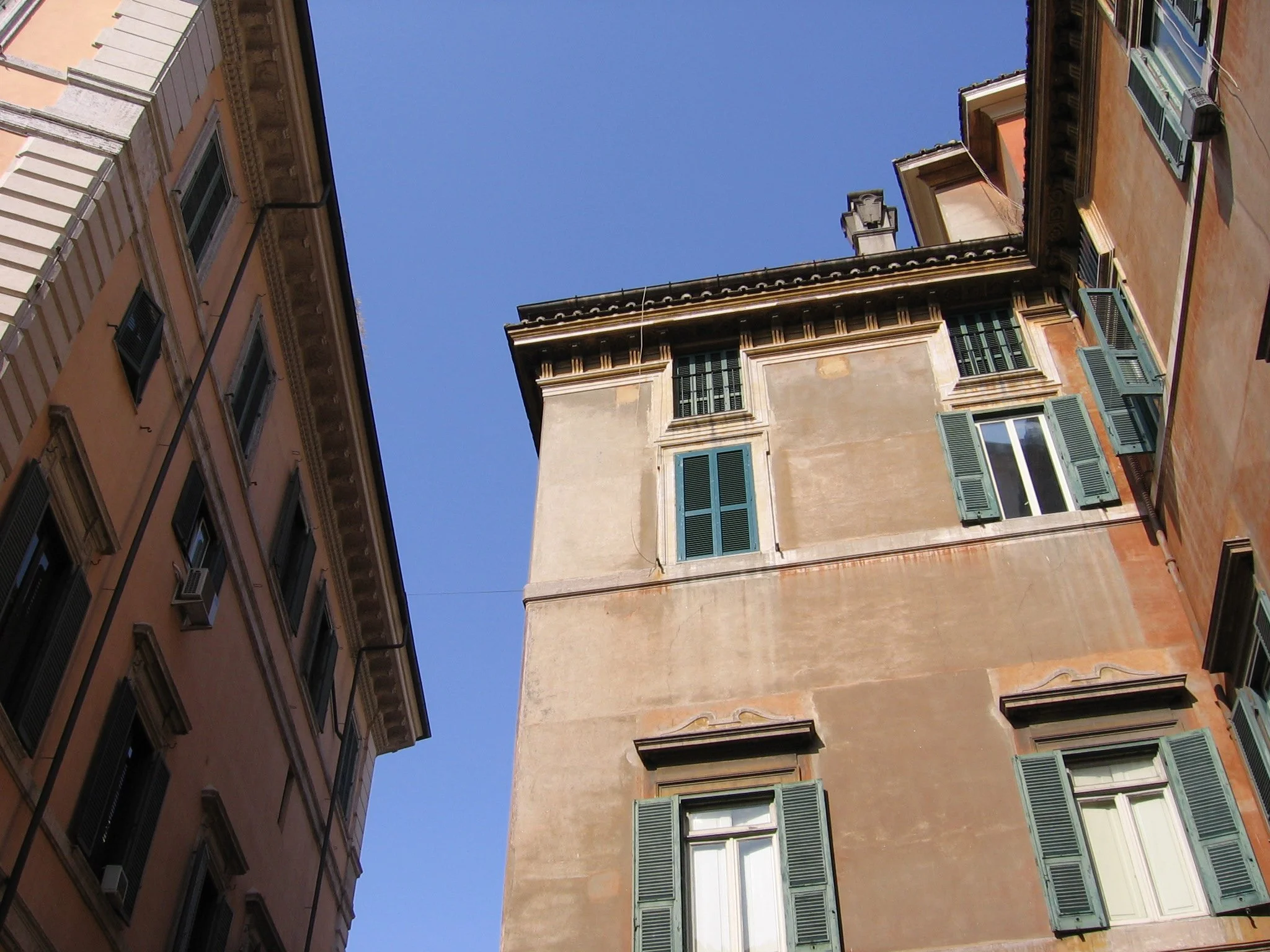
The cobblestones on Via delle Carrozze were darkened, as if given a light brushstroke of charcoal black from the kisses of the morning mist. Their juxtaposition with the ochre colored palazzos only accentuated the dark blue of the sky, from which the sun’s rays sprinkled unconditional love for anything or anyone below.
If I were back in the States, the word “sprinkles” might have brought ice cream to mind. Is it too early in the morning for some Italian gelato? If one existed, the Ayurvedic angel on my shoulder would gently remind me that I should eat with the seasons. Cold foods in the summer, warm in the winter, and the calendar doesn’t say it’s June yet. I wondered how many yogis existed in Rome.
My daydreaming is interrupted as I quickly push back against the wall of the palazzo, making way for a scooter that whisks by. I’m ever so grateful for the type of siren only a mosquito of a vehicle can produce. Vespa was definitely not a misnomer! Her parents chose wisely, not to name her after a fruit or a borough of New York City.
And now, the first major decision of the day presented itself to me. Although a Scorpio by sun sign, I hovered very closely at the time of my birth to Libra, and so, the question I spent more than a rational amount of time on was, do I go left or right? If I veered left, I would be headed in the direction of the church of San Carlo and the northern end of the Via del Corso, one of Rome’s main streets, especially for shoe shopping. To the right, I would be welcomed by the Spanish Steps.
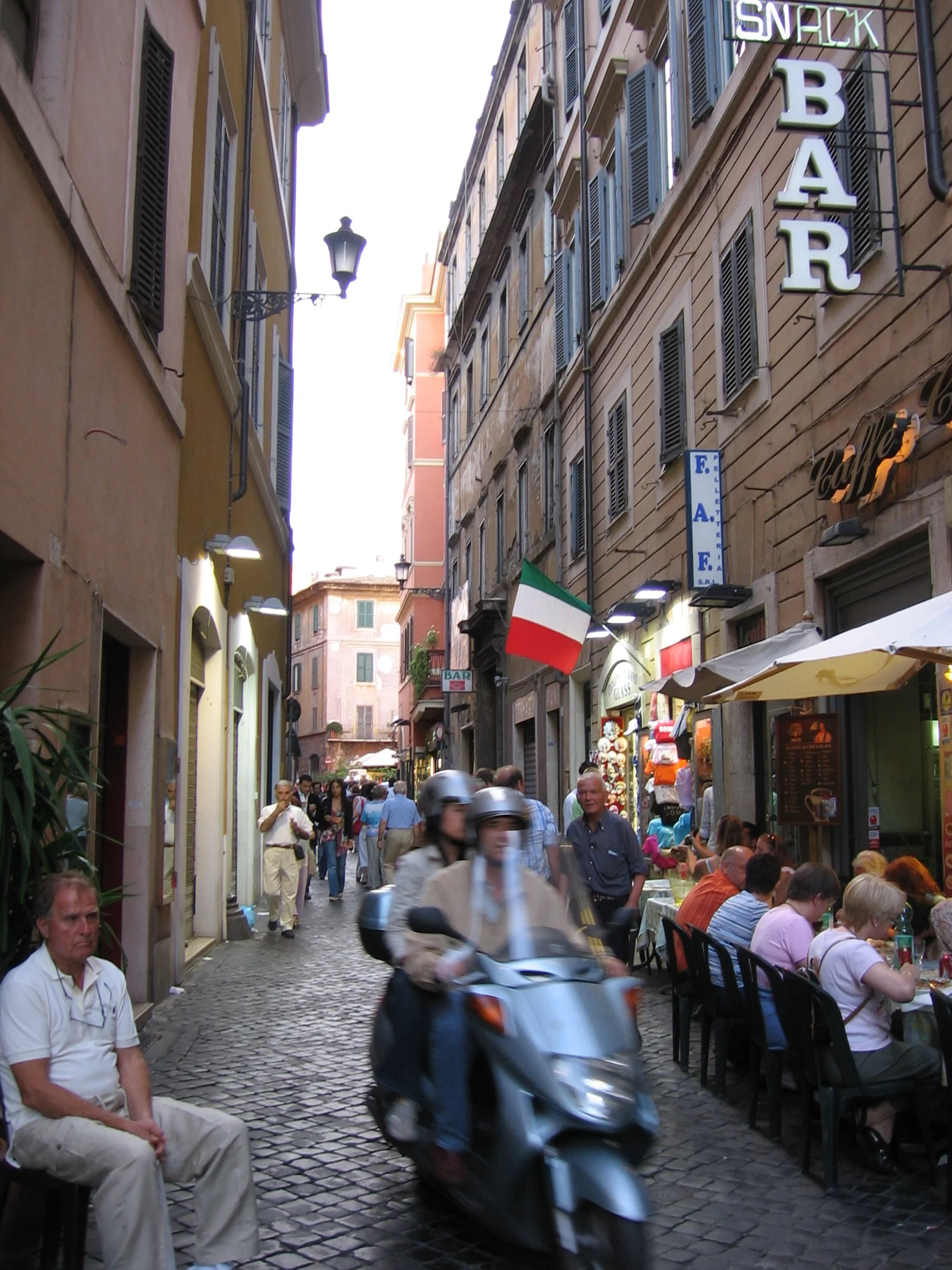
There is something about spring in April in Rome that beckons people-watching, so I headed to the area aptly named because the Spanish ambassador to the Vatican existed there since 1622. It is also the former stomping ground of Keats and other English poets of the Victorian era, and by some divine hand I can’t explain, I have always been led to places where writers walked. Most of the time, I never realized it, like the time I bought a lottery ticket in a deli on Walt Whitman’s Park Row of the early printing days of Manhattan. Or that time I used the Goethe Monument in Vienna to park my rear end so I could sort out the contents of my handbag.
I’m glad I did, because I was welcomed by the sight of the most beautiful azaleas on the steps, one that has always been synonymous with spring in Rome. I thought of the goddess Persephone, who legend has it the idea of the flowers came. To make a long story short, she gave birth to spring and summer due to a set of events involving escapism, murder, and imprisonment (you know, the juicy stuff of Greek mythology that reads better than Harlequin novels). She was also the Greek Goddess of Innocence, but I’m not sure how innocence and Rome connect. I will do my best to please the gods on this one. There is always confession.
Next, I thought I’d pick up my liquid breakfast on the way to the Pantheon, where I would sit down to a proper lunch and try not to devour the tablecloth as I voraciously await the Italian delicacies before me. This was my favorite part of meandering the centro storico of Rome. Though I knew my favorite route to take was the Piazza Colonna to the Via Uffici del Vicario, after that point it was always a mysterious maze no matter how many times I’d been to Rome before. I would for some reason lose my bearings, and be left with just my intuition GPS in hand.
I squeezed through the crowds at Giolitti, which was surprisingly crowded for off-peak tourist season prior to lunch, and ordered the crema marrone (chestnut), which was purportedly a favorite of Pope John Paul II. I thought this might be a nice act of reconciliation since I missed Easter mass by two weeks, and, in spite of not being a practicing Catholic, I did like this particular late pontiff. The gelato was heavenly (no pun intended).
Where did the time go? I ask because I seemed to have eaten my breakfast in just a few minutes, with little evidence remaining except a napkin with the letter “G” on it.
I continued to walk the winding streets, past Gucci sunglass shops, a baby-faced smiling carabinieri, Kodak camera vendors, and trattorias preparing to open for lunch, looking for a column of the Pantheon to peek out from between the palazzos, a sign that I’ve located it and my silly scavenger hunt was succeeding.
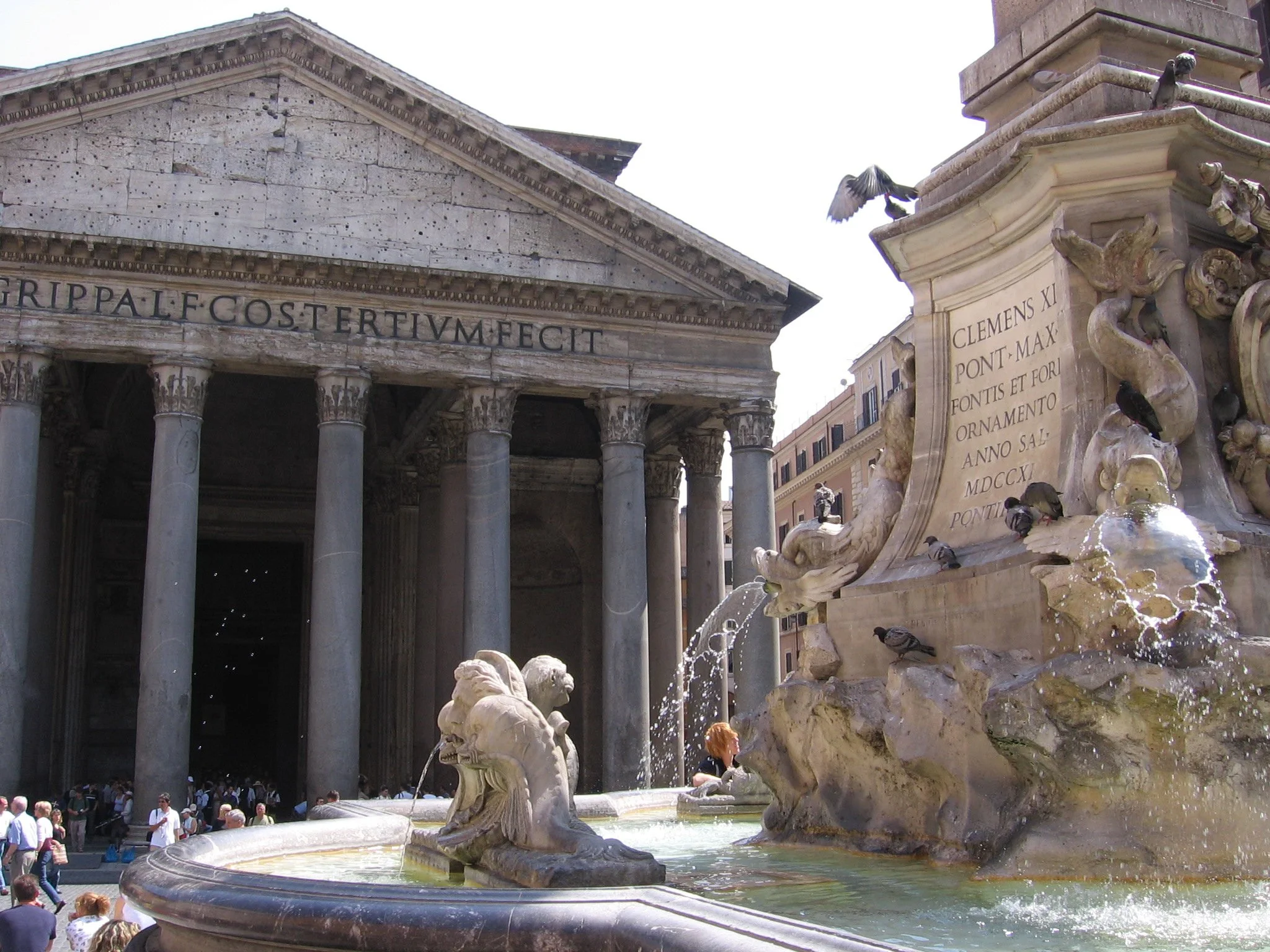
As streaks of light would shine in through cracks and corners, illuminating the space it filled, I would occasionally stop and let it bathe my spirit until, finally,I spotted something in the distance. Behind a café with its yellow-orange exterior and red and white checkered umbrella was something grey. It was part of a Corinthian, the type of column the Pantheon is adorned with. Eureka!
I enter, and notice the hole at the top of the roof, that is open to the sky. It is called the oculus, and has a magical appearance, as if a portal to a magical land or realm. Vapor and some rain always come through, landing on the marble floor, but for some mysterious reason never flooding the Pantheon. In spring, it is a special kind of mist, the kind you want to touch or bottle up or be baptized with.
I headed next for lunch at Insalata Ricca, which means “rich salad.” Salads served here were gargantuan, came in many varieties, and could be eaten as an entire meal. This cozy place was tucked in a little piazza called the Piazza Pasquino, right behind the larger and more touristed Piazza Navona. Sunglasses on, I peacefully ate my meal, without having to worry about the paparazzi disturbing the celebrity I pretended to be.
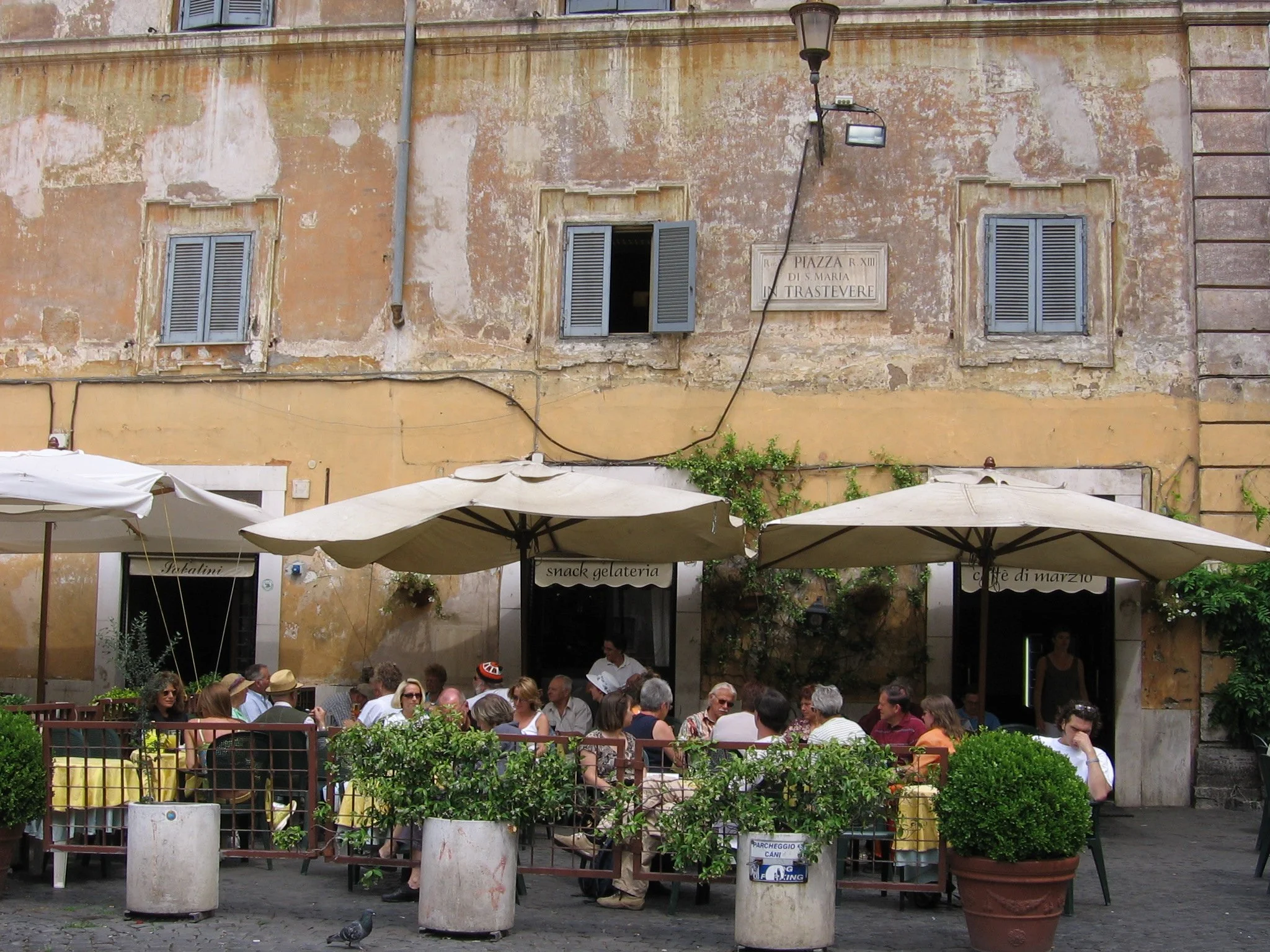
At the height of mid-afternoon, the Roman heat of late April felt wonderful on my skin, and just right so that I did not feel the urge to dive in the Tiber, which as expected, was roaring with spring fervor, almost spiritually carrying me over the threshold to Trastevere. A writer’s haven, this section’s denizens are of both Roman and ex-patriot origin. It is called the Brooklyn of Rome, or in other words, the “real” Rome. Being from Brooklyn, I am never quite sure how to respond to that, but do see similarities. It is a working class neighborhood that has experienced some major gentrification over the last decade, but also retains some of its “color.” Laundry still hangs from the windows, paint peels away with no intention of repair on the facades of homes,and people speak with an accent that is decidedly not centro storico (I’m not sure how to say “fughettaboutit” in the local dialect, but I think you get the picture).
My purpose for coming here was to visit the Church of Santa Maria, in a piazza of the same name. One of the oldest churches in the city (built in the 4th century), it is known for its gorgeous mosaics and was the first church in Rome to have been dedicated to Mother Mary. To me, this meant connecting to my own divine feminine energy, that of compassion, creation, and love. Being here in April was especially meaningful, because of the analogies of birth that spring brings to mind. For Christians, it was through Mary’s son Christ that humanity had witnessed the vernal rebirth of the soul, as is celebrated on Easter. Another way of looking at spring is as a cyclical force that is feminine at its core. As the Latin proverb says, “omne vivum ex ovo” or “all life comes from an egg.”
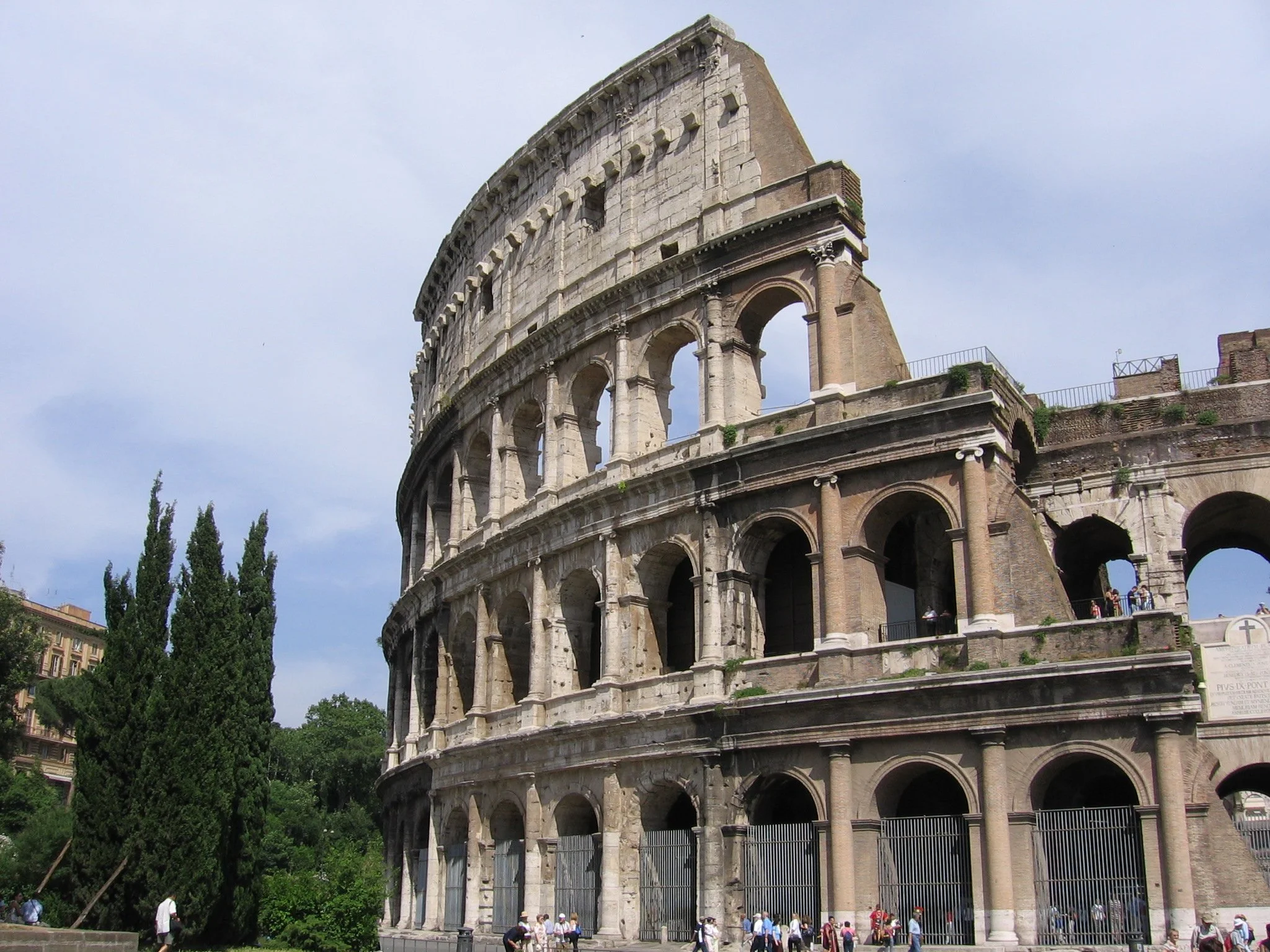
I thought it would be appropriate at this time to take a cab to the final destination of my journey, which was on the other side of town. After revisiting the grounds at the Roman Forum and Coliseum I had seen on previous trips, it had started to rain and I sought cover near the Metro Colosseo stop, along with some other Italians who had just emerged from the train. A father placed his arms around his son, as the young boy glowed in awe over the unexpected downpour and the unique cloud formations being created as it swept through above us. Everyone was smiling and sharing this moment of togetherness, complete strangers marveling at an act of nature that would bloom May flowers from April seeds. The rain stopped, and some mist remained in the air. I emerged for a moment, covering myself in it, and feeling the birth of spring on my pores.
Taking the metro back to my hotel, I was to prepare to end the day with dinner at dusk at La Rampa, tucked behind the Spanish Steps, and a secret of the locals. This time around, the light of the moon and not the sun would shine upon me, the female ying energy taking over the night shift from the male yang of day. And the dance of life continues.
I know what you’re thinking. Dinner with who? No worries– Persephone would approve, and so would the Vatican.